15 Fun Multiplication Games for Kids (Online and Printable)
15 fun multiplication games for kids: online speed tests, printable bingo and dominoes, and active games like hopscotch, with tips for parents and teachers.
Print, check and practice
Start with a worksheet and its answer key, or follow the five-day pack. Both are free and available in Letter and A4.
Learning multiplication does not have to feel like boring memorization. Kids learn best when they play, explore, and compete in friendly challenges. Multiplication games for kids transform practice into an engaging adventure that builds confidence and fluency. Whether you prefer digital activities or hands-on printables, the right games make mastering times tables enjoyable and effective.
What You'll Learn
- 15 engaging multiplication games to suit different kids
- Which games work best online versus printable formats
- How to choose age-appropriate games for your child
- Tips for parents and teachers to maximize learning through play
- Strategies to keep kids motivated while building multiplication skills
Why Multiplication Games Work for Kids
Games give children lots of repetition without the feeling of drill. When children play multiplication games, they recall facts again and again while their attention is on winning, finishing a level, or beating their own best score.
Kids often practice multiplication facts willingly for longer when the activity feels like play rather than work. The immediate feedback from games helps children identify mistakes and self-correct without feeling discouraged.
Games can also ease math anxiety. When the pressure of formal testing disappears, many children relax and learn more effectively. The low-stakes environment of multiplication games for kids allows learners to take risks and learn from errors without fear of judgment.
Top 5 Online Multiplication Games for Kids
1. Times Tables Speed Test
Our free times tables speed test challenges kids to answer as many multiplication questions as they can before the clock runs out. Players choose one table or mixed tables and a 30, 60, or 120-second round, then try to beat their own best score.
Best for: Kids who love a race against the clock
Age range: 7-11 years
Key features: One table or mixed practice, accuracy and best-streak results, printable certificate when a test is passed
Because children compete against their own previous score rather than against classmates, the speed test builds fluency without the sting of losing to someone else.
2. Table-by-Table Practice Rounds
Our interactive practice mode turns each times table into a short round of 12 questions with no time limit. Kids type answers with the on-screen number pad or keyboard, get instant feedback, and can ask for a hint when they are stuck.
Best for: Beginners and children who feel anxious under time pressure
Age range: 6-10 years
Key features: 12-question rounds, hints, try-again feedback, no timer pressure
Pair a practice round (accuracy first) with a speed test on the same table later in the week (speed second) for a simple, effective routine.
3. Streaks, Badges, and Best Scores
Many kids stay motivated when they can see their progress. The My Progress page tracks daily streaks, earned badges, best speed test scores, and a daily question goal, all saved privately on the device.
Best for: Kids motivated by collecting and completing
Age range: 7-12 years
Key features: Daily streaks, badges, best scores, daily goal
Checking the streak together for a minute each day turns practice into a small ritual rather than a chore.
4. Online Multiplication Bingo
Digital bingo combines the familiar game format with multiplication practice. The caller announces problems like "4 times 7," and players mark the answer (28) on their cards.
Best for: Group settings or family play
Age range: 6-9 years
Key features: Familiar rules, easy to adjust to the tables being practiced
Many free online bingo generators exist, or a parent or teacher can call problems from a list while children use printed cards.
5. Adaptive Practice Apps
Adaptive apps adjust which facts they show based on each child's answers, bringing back the facts a child misses more often.
Best for: Self-directed learners who want customized challenges
Age range: 7-12 years
What to look for: Instant feedback, focus on missed facts, clear progress reports, no distracting ads
Before choosing an app, try it yourself for a few minutes. The best ones spend most of the time on actual multiplication rather than on animations and rewards.
Top 5 Printable Multiplication Games for Kids
6. Multiplication War Card Game
This twist on the classic card game requires only a standard deck of cards. Players flip two cards simultaneously and multiply the numbers. The player with the highest product wins all the cards.
Best for: Building quick recall without screens
Age range: 7-10 years
Materials needed: Standard playing deck (remove face cards)
The game naturally differentiates difficulty. Beginners might multiply smaller numbers while advanced players tackle the full deck. Multiple rounds provide abundant practice without feeling repetitive.
7. Times Tables Board Race
Print a board game featuring a winding path from start to finish. Players roll two dice and multiply the numbers. A correct answer moves them forward one space; a wrong answer means they stay put. Special squares offer bonuses or challenges.
Best for: Family game nights and small group practice
Age range: 6-9 years
Materials needed: Printed board, dice, game pieces
Parents can customize the board to focus on specific times tables their child finds challenging. Laminating the board allows for repeated use across multiple children or years.
8. Multiplication Bingo Printable Cards
Print bingo cards filled with multiplication products, arranging the numbers differently on each card. Call out problems and have students mark the answers. First to complete a row wins.
Best for: Classroom activities or party games
Age range: 6-10 years
Materials needed: Printed cards, markers or chips
Teachers can create themed cards for holidays or special events. Different arrangements on each card stop students from simply copying their neighbors. This game works equally well for individual practice or groups of 30 students.
9. Multiplication Puzzles and Riddles
These printable worksheets hide jokes or images behind multiplication problems. Students solve the facts to reveal the punchline or complete the picture.
Best for: Students who enjoy mystery and discovery
Age range: 7-11 years
Materials needed: Printed puzzle sheets, pencils
The reward of revealing the hidden content motivates completion. Students often request additional puzzles, creating organic opportunities for extra practice. Color-by-multiplication worksheets combine art with math for creative learners.
10. Times Tables Dominoes
Print domino-style tiles showing multiplication problems on one half and products on the other. Players match problems to answers, building chains like traditional dominoes.
Best for: Kids who enjoy matching and puzzles
Age range: 8-12 years
Materials needed: Printed and cut domino tiles
This game reinforces the connection between problems and solutions through physical manipulation. Students can play independently or in small groups, making it versatile for different settings.
Active Physical Multiplication Games
11. Multiplication Hopscotch
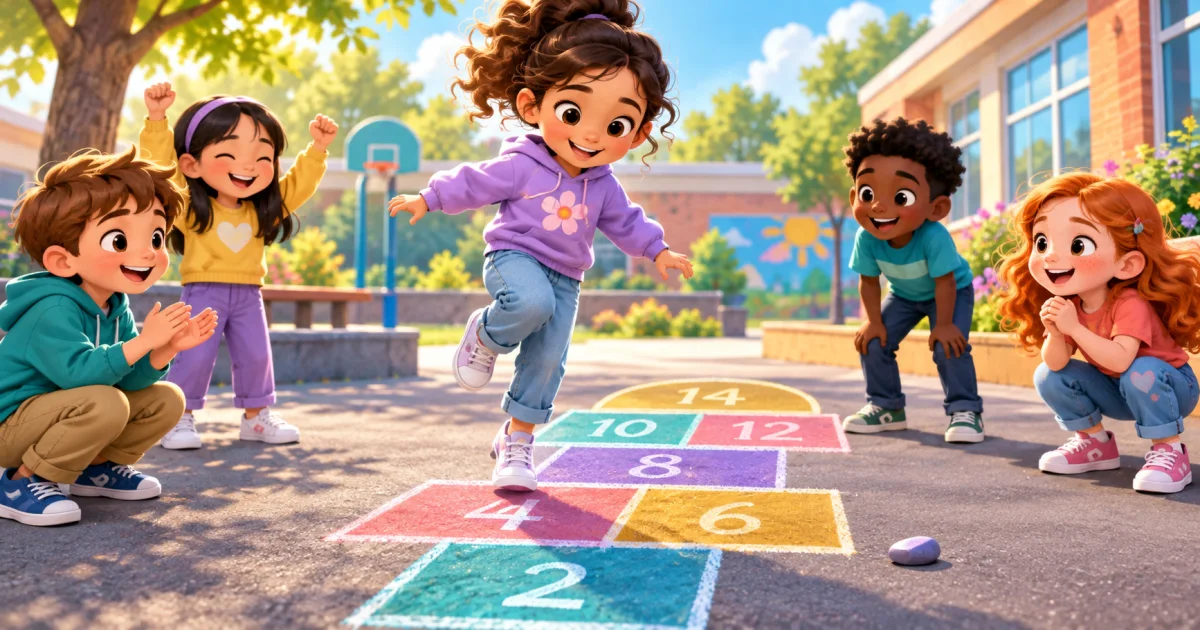
Draw a hopscotch grid with products instead of sequential numbers. Call out multiplication problems and have students hop to the correct answer.
Best for: Energetic learners who need movement breaks
Age range: 6-9 years
Materials needed: Chalk, outdoor space or tape for indoor play
Movement breaks help many children refocus. This game combines exercise with practice, making it ideal for kids who find it hard to sit still.
12. Beach Ball Toss Multiplication
Write multiplication problems on a beach ball with permanent marker. Students toss the ball, catch it, and solve the problem nearest their right thumb.
Best for: Group activities and classroom energizers
Age range: 7-11 years
Materials needed: Beach ball, permanent marker
Teachers use this game as a quick warm-up or brain break during longer lessons. The unpredictability of which problem appears keeps engagement high across multiple rounds.
DIY Multiplication Games You Can Make at Home
13. Egg Carton Multiplication
Label egg carton cups with numbers 1 through 12. Drop two small objects inside, close the lid, shake, and open. Multiply the two numbers where the objects landed.
Best for: Kids who enjoy hands-on materials
Age range: 6-8 years
Materials needed: Empty egg carton, marker, small objects like buttons or beans
Parents appreciate this zero-cost option that transforms recycling into a learning tool. Children can self-check answers using a printable multiplication chart, building independence alongside math skills.
14. Multiplication Memory Match
Create card pairs showing problems and their answers. Spread cards face down and play traditional memory, flipping two at a time to find matches.
Best for: Strengthening problem-answer associations
Age range: 7-10 years
Materials needed: Index cards, markers
This game builds concentration skills alongside multiplication fluency. Start with easier facts like 1s, 2s, and 10s, then gradually introduce more challenging times tables as confidence grows.
15. Multiplication Bowling
Set up plastic pins labeled with numbers. Roll a ball to knock down pins, then multiply the numbers on the fallen pins together.
Best for: Making math practice feel like recreation
Age range: 8-12 years
Materials needed: Toy bowling set, number labels
This game works beautifully for backyard play or indoor rainy day activities. Siblings of different ages can play together by adjusting which times tables they use for scoring.
How to Choose the Right Multiplication Games for Your Child
Consider your child's current skill level first. Beginners need games that focus on one or two times tables at a time, while advanced students benefit from mixed practice across all facts. Games should challenge without overwhelming.
Match games to what your child enjoys. Kids who love colors and puzzles may prefer pattern-based games, music lovers may enjoy games with songs or chants, and energetic kids often do best with movement games like hopscotch or ball toss.
Think about available time and resources. Online games require devices and internet access but offer instant feedback and progress tracking. Printable games need preparation time but work anywhere without technology. Active games demand physical space but channel excess energy productively.
Rotate game types to maintain novelty. Children who play the same game repeatedly may lose interest despite its educational value. Alternating between online, printable, and physical games keeps practice sessions fresh and engaging.
Tips for Parents Using Multiplication Games at Home
Set consistent practice schedules. Ten to fifteen minutes of daily game play builds stronger skills than hour-long weekend sessions. Regular exposure helps transfer facts from short-term to long-term memory.
Play alongside your child occasionally. Your participation demonstrates that math matters and creates bonding opportunities. Children work harder when practicing feels like quality time rather than isolated homework.
Celebrate progress, not just perfection. Notice when your child answers faster or tackles harder problems, even if mistakes still occur. Positive reinforcement builds the confidence needed to persist through challenging concepts.
Connect games to real-world contexts. After playing multiplication games for kids, point out multiplication in daily life like calculating grocery costs or measuring recipe ingredients. These connections deepen understanding beyond abstract numbers.
Tips for Teachers Using Multiplication Games in the Classroom
Use games strategically for different instructional purposes. Introduce new concepts with exploratory games that encourage discovery. Reinforce learned material with competitive speed games. Assess understanding through game performance rather than traditional quizzes.
Create stations for differentiated practice. Set up multiple game options targeting different times tables or difficulty levels. Students rotate through stations, naturally practicing at their individual skill levels without obvious ability grouping.
Incorporate cooperative elements to build classroom community. Partner students of varying abilities together, with stronger students teaching struggling peers during gameplay. Peer tutoring often benefits both partners, because explaining a fact helps the stronger student remember it too.
Track individual and class progress through game results. Many online platforms provide analytics while printable games can include self-recording sheets. Use this data to identify which times tables need additional instruction or review.
Keeping Kids Motivated with Multiplication Games
Implement achievement systems that recognize milestones. Award badges, certificates, or small prizes when children master specific times tables or reach score goals. Visible progress markers sustain motivation over weeks and months of practice.
Allow student choice whenever possible. Letting children select which game to play increases buy-in and autonomy. Even narrow choices between two options give learners a sense of control over their education.
Balance challenge and success carefully. Games should feel difficult enough to engage attention but achievable enough to avoid frustration. Adjust difficulty gradually as skills improve, maintaining the sweet spot where learning happens most effectively.
Connect multiplication fluency to privileges children value. Perhaps mastering times tables through 6 earns extra screen time or staying up fifteen minutes later. Used sparingly, rewards like these can help children push through the hardest tables, but the long-term goal is for children to enjoy their own progress.
Common Mistakes to Avoid with Multiplication Games
Do not rely exclusively on games for multiplication instruction. Games reinforce and practice facts but work best alongside direct teaching of concepts and strategies. Children need to understand what multiplication means, not just memorize isolated facts.
Avoid games that are too easy for extended periods. Once a child masters specific times tables, continuing to practice only those facts wastes valuable learning time. Progressively increase difficulty to maintain cognitive challenge.
Do not turn games into high-pressure competitions that increase math anxiety. While friendly competition motivates many children, some students shut down when losing repeatedly. Offer single-player options and emphasize personal improvement over beating others.
Resist the temptation to over-praise easy accomplishments. Celebrate genuine effort and growth rather than activities children complete effortlessly. Meaningful recognition comes from overcoming challenges, not coasting through simple tasks.
Frequently Asked Questions
Ten to twenty minutes of focused practice produces better results than longer unfocused sessions. Younger children benefit from shorter, more frequent practice while older students can sustain attention for extended periods.
Most children begin multiplication concepts around age 7 or second grade. However, games introducing skip counting and grouping concepts prepare younger children for formal multiplication instruction later.
Games should complement rather than completely replace other practice methods. A balanced approach includes games, written practice, real-world applications, and conceptual instruction for comprehensive understanding.
When your child answers problems quickly and accurately without counting or hesitating, they are ready for increased challenge. Move to mixed practice, larger numbers, or timed elements gradually.
Yes, with appropriate modifications. Games reduce anxiety and allow for differentiated pacing that benefits many learners with special needs. Choose games matching your child's specific learning profile and challenges.
Summary
Multiplication games for kids transform essential math practice into engaging activities that children actually enjoy. From online speed tests to printable bingo cards to active hopscotch variations, there are options for every child and setting. The key lies in matching games to your child's current skill level, rotating activities to maintain novelty, and celebrating progress along the way.
Effective multiplication practice balances games with conceptual instruction and real-world applications. Ten to fifteen minutes of daily game play builds stronger long-term retention than cramming before tests. Whether you choose digital options with instant feedback or hands-on printables that work anywhere, consistent practice through play develops the fluency children need for mathematical success.
Start with one or two games that match your child's interests and abilities. As confidence grows, introduce new challenges and formats. The multiplication games you choose today build not just math skills but also positive attitudes toward learning that benefit children throughout their educational journey.
Related: how to memorize multiplication tables
Related: multiplication rhymes