How to Introduce Multiplication to Second Graders
Hands-on ways to introduce multiplication in second grade: equal groups, arrays, skip counting, picture books and games, plus common mistakes to avoid.
Print, check and practice
Start with a worksheet and its answer key, or follow the five-day pack. Both are free and available in Letter and A4.
Introducing multiplication to second graders requires emphasizing concrete experiences and conceptual understanding over abstract memorization, building on familiar addition foundations while developing new multiplicative thinking patterns, and maintaining playful engaging approaches matching seven- and eight-year-olds' developmental needs and attention capacities. Effective introduction establishes what multiplication means through hands-on activities, real-world connections, and visual models before expecting calculation fluency or fact recall. This guide shows teachers and parents how to make those first multiplication experiences positive, so they support years of later learning.
What You'll Learn
- Why second grade is a good time to introduce multiplication
- Developmental readiness indicators for multiplication learning
- Concrete hands-on activities introducing multiplication concepts
- How to build on addition foundations toward multiplicative thinking
- Common challenges and solutions during initial introduction
Why Second Grade for Multiplication Introduction
Developmental Readiness
Seven- and eight-year-old children typically demonstrate cognitive readiness for beginning multiplication concepts. They possess sufficient working memory capacity for simple repeated addition, think concretely benefiting from hands-on experiences, recognize simple patterns supporting skip counting, and maintain attention for 15-20 minute focused activities.
However, second graders remain primarily concrete operational thinkers per Piagetian developmental stages. Abstract symbolic reasoning develops later requiring multiplication introduction emphasizing tangible experiences with physical objects, visual representations, and familiar contexts before expecting facility with pure numerical abstractions.
The developmental sweet spot involves sufficient cognitive maturity for basic multiplicative thinking without expecting advanced abstraction inappropriate for this age. Quality introduction respects developmental limitations while capitalizing on emerging capabilities.
Individual Variation: While typical second graders demonstrate readiness, considerable individual variation exists. Some children show readiness during first grade while others need additional time. Observe individual students adjusting introduction timing to genuine readiness rather than rigid calendar-based schedules.
Curriculum Progression
In the United States, the Common Core introduces multiplication ideas in second grade through equal groups and arrays, building on first-grade counting, addition and patterns. In England, children meet multiplication even earlier: Year 2 pupils (ages 6-7) learn the 2, 5 and 10 times tables.
Second-grade multiplication typically emphasizes understanding over memorization. Students should grasp what multiplication means, recognize multiplication situations, and solve simple problems using concrete materials or drawings before extensive fact practice begins in third grade.
This gradual progression from conceptual understanding to procedural fluency across multiple years respects developmental realities preventing premature rush toward abstraction before foundations solidify. Understanding built patiently tends to last longer than facts drilled early without meaning.
Foundation for Future Learning
Quality second-grade introduction establishes conceptual foundations supporting all future multiplication work including third-grade fact fluency, fourth-grade multi-digit multiplication, fifth-grade fraction operations, and beyond. Students who understand multiplication meaning prove more successful than those with fragile memorization without comprehension.
Conversely, poor introduction creates confusion, anxiety, and negative attitudes persisting throughout mathematical education. The initial multiplication experiences disproportionately influence long-term mathematical relationships and identities making quality introduction essential rather than merely convenient.
Investment in thoughtful developmentally appropriate introduction pays dividends across years of subsequent learning. Rushing through introduction to advance curriculum proves counterproductive creating weak foundations requiring extensive later remediation.
Building on Addition Foundations
Connecting to Repeated Addition
Most accessible multiplication introduction involves presenting multiplication as repeated addition of equal quantities. Second graders already fluent in addition readily grasp that adding same number repeatedly (3 + 3 + 3 + 3) relates to multiplication (4 × 3).
Explicit Connections: Model connections explicitly rather than assuming students discover relationships independently. "When we add 5 + 5 + 5, we're adding three fives. This is the same as 3 groups of 5, which we write as 3 × 5."
Use visual representations showing both formats simultaneously. Write "2 + 2 + 2 + 2 = 8" above "4 × 2 = 8" connecting expressions physically with arrows or brackets. The visual linkage makes abstract connection concrete.
However, emphasize that while related, multiplication represents more than just repeated addition. Multiplication involves thinking about equal groups as single entities rather than individual objects supporting later multiplicative reasoning beyond additive strategies.
From Counting to Skip Counting
Second graders typically know counting by ones fluently. Extend toward skip counting (counting by twos, fives, tens) providing verbal pattern foundations for multiplication.
Skip Counting Activities:
- Count around circle with each child saying next multiple (2, 4, 6, 8...)
- Skip count while moving (jump on every multiple, clap on every fifth count)
- Fill in missing numbers in skip counting sequences
- Create visual skip counting representations using number lines or hundred charts
Make skip counting meaningful connecting to multiplication. After skip counting by threes, state "We just counted the three times table! 1 three is 3, 2 threes are 6, 3 threes are 9..."
The rhythmic verbal patterns create memorable sequences supporting early fact recall before formal memorization begins.
Understanding Commutativity Through Addition Experience
Second graders learning addition discover commutativity (3 + 5 equals 5 + 3). Leverage this understanding introducing multiplication commutativity reducing memorization burden.
Create parallel arrays physically. Build 3 rows of 5 counters alongside 5 rows of 3 counters. Students count discovering both total 15 demonstrating 3 × 5 equals 5 × 3 just as addition order doesn't matter.
The connection to familiar addition property makes new multiplication property accessible. "Remember how we learned that 4 + 7 equals 7 + 4? Multiplication works the same way. 4 × 7 equals 7 × 4."
However, explain that while products equal, meanings differ. 4 groups of 7 represents different situation than 7 groups of 4 even though both total 28. The semantic distinction proves important for problem-solving even when computational results match.
Concrete Hands-On Introduction Activities
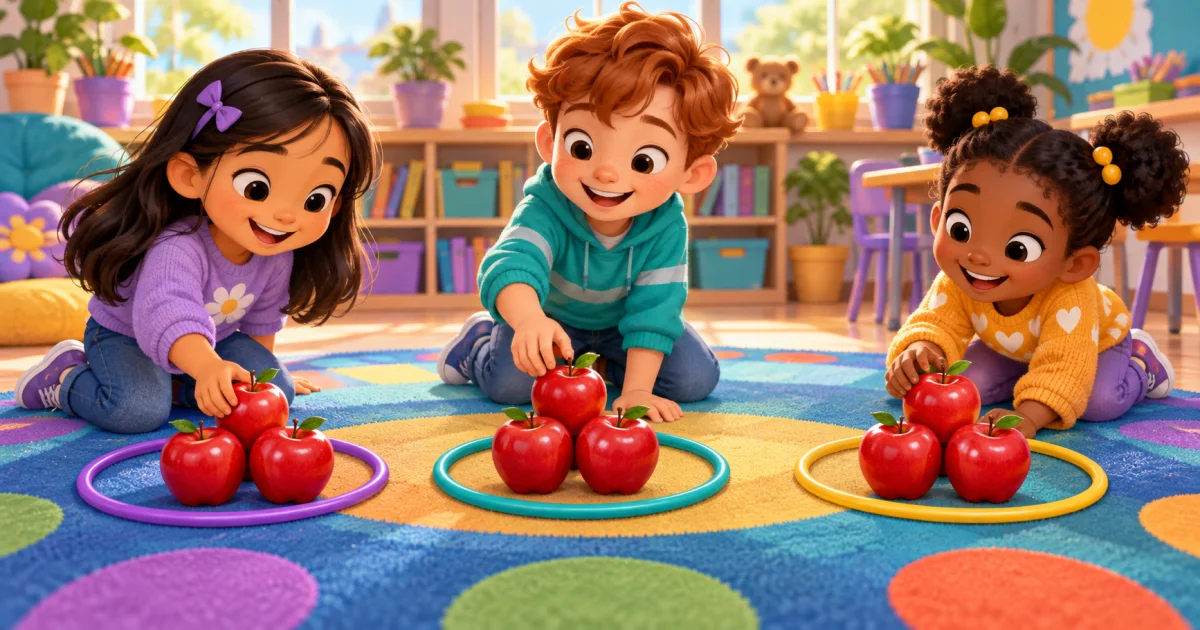
Equal Groups with Manipulatives
Perhaps most fundamental introduction activity involves creating equal groups using physical objects discovering totals through direct counting.
Basic Implementation:
- Provide each student counters (beans, cubes, buttons) and containers (cups, bowls, plates)
- Present scenario: "Show me 4 groups with 3 objects in each group"
- Students physically create groups then count total discovering 4 × 3 = 12
Progression: Begin with very small numbers (2 or 3 groups of 2 or 3) allowing focus on concept over calculation complexity. Gradually increase group quantities and group sizes as understanding solidifies.
Variation: Reverse process presenting totals asking students creating different equal group arrangements. "Here are 12 counters. Can you arrange them into equal groups? How many different ways?" This exploration reveals multiple factor pairs (2 groups of 6, 3 groups of 4, etc.) building number sense.
Connection to Notation: After physical manipulation, introduce symbolic notation. "You made 5 groups with 2 in each. We write this as 5 × 2 = 10." The notation follows concrete experience making abstract symbols meaningful.
Array Building
Arrays (rectangular arrangements with objects in rows and columns) provide powerful visual multiplication model revealing important properties while engaging spatial reasoning.
Basic Array Activity:
- Provide square tiles, graph paper, or linking cubes
- Request specific arrays: "Build an array with 3 rows and 4 in each row"
- Students construct then count total tiles
- Record symbolically: "3 × 4 = 12"
Exploration: Encourage creating various arrays discovering different arrangements for same total. "Make different arrays using exactly 12 tiles." Students create 1×12, 2×6, 3×4, discovering factor relationships.
Commutativity Discovery: Have students rotating arrays. The 3×4 array rotated becomes 4×3 with identical tile total. This visual physical experience makes commutativity obvious rather than arbitrary rule to memorize.
Area Connection: Introduce language connecting arrays to area. "This array is 5 tiles wide and 3 tiles tall. The area is 15 square tiles." Early area language scaffolds future geometry learning.
Real-World Problem-Solving
Embedding multiplication in familiar contexts demonstrates relevance while building problem recognition skills. Second graders should identify multiplication situations and use concrete strategies solving rather than calculating abstractly.
Scenario Examples:
- Snack Distribution: "Each child gets 3 crackers. There are 8 children. How many crackers needed total?" Students use counters representing crackers creating 8 groups of 3.
- Classroom Organization: "Tables are arranged in 4 rows with 5 tables in each row. How many tables total?" Draw diagram or build representation discovering answer.
- Story Problems: Create stories about students' interests. "Malik has 6 toy cars. Each car has 4 wheels. How many wheels altogether?"
Problem-Solving Process: Emphasize systematic approaches including understanding situation, representing with objects or drawings, determining operation, finding answer, and checking reasonableness. The process proves more important than quick correct answers during introductory stages.
Movement and Kinesthetic Activities
Second graders benefit from learning that involves whole-body movement, which keeps active children engaged and gives everyone a break from sitting.
Movement Multiplication:
- Group Formations: "Make groups of 4. We have 5 groups. Everyone count how many children total." Physical grouping makes multiplication tangible.
- Skip Counting with Jumps: Jump forward counting by twos, fives, or tens. The physical movement embeds number patterns kinesthetically.
- Multiplication Hop Scotch: Draw grid numbering squares by multiples. Students hop landing on products while reciting facts.
- Array Human Arrangements: Students arrange themselves into arrays. "Make 3 rows with 6 people in each row." Count total students experiencing multiplication through physical positioning.
Movement activities provide welcome breaks from seated work while delivering genuine learning. The memorable physical experiences support retention and engagement.
Making Multiplication Meaningful
Connecting to Daily Experiences
Regularly point out multiplication in everyday contexts making mathematics relevant beyond worksheets. Second graders should recognize multiplication surrounds them in numerous situations.
Classroom Examples:
- Calendar: "There are 7 days in each week. How many days in 4 weeks?"
- Materials Distribution: "Each table needs 5 pencils. How many for 6 tables?"
- Snack Time: "Packages contain 8 crackers each. How many in 3 packages?"
- Seating: "Rows have 4 desks. There are 5 rows. Total desks?"
Home Connections: Communicate with families encouraging multiplication conversations during daily routines. Cooking (2 eggs per batch, making 4 batches), shopping (apples cost $2 each, buying 6), games (dice showing same number multiple times), and countless other situations involve multiplication.
The frequent authentic exposure demonstrates multiplication as useful tool rather than arbitrary school requirement building motivation and meaning.
Using Children's Literature
Picture books and stories provide engaging multiplication contexts supporting literacy integration alongside mathematics learning.
Recommended Books:
- "One Hundred Hungry Ants" by Elinor J. Pinczes: Ants rearrange into different group formations discovering factor pairs
- "The Doorbell Rang" by Pat Hutchins: Cookies shared among increasing numbers of children
- "Two of Everything" by Lily Toy Hong: Everything gets doubled in magical pot
- "Amanda Bean's Amazing Dream" by Cindy Neuschwander: Counting by ones versus multiplication
Read stories multiple times. First for enjoyment, later identifying mathematical elements, finally solving related problems. The literature integration makes multiplication memorable and enjoyable.
Games and Playful Practice
Second-grade multiplication introduction should feel more like play than work. Games maintain engagement while providing essential practice in pressure-free contexts.
Introductory Games:
- Multiplication War (simplified): Compare products of rolled dice or drawn cards, larger product wins
- Equal Groups Memory: Match picture cards showing groups to number cards showing totals
- Array Bingo: Call out dimensions, students find and cover matching array pictures
- Skip Counting Races: Teams skip count by designated multiples, first reaching target wins
Games provide repetition supporting learning without tedium from excessive worksheets. The enjoyment builds positive mathematical attitudes crucial for long-term success.
Common Challenges and Solutions
Confusing Multiplication and Addition
Second graders sometimes add all numbers in multiplication problems rather than recognizing grouping structure. Seeing "3 × 4" they calculate 3 + 4 = 7 instead of 3 groups of 4.
Solution: Emphasize language and physical representation. "3 × 4 means 3 groups with 4 in each group. Let's make it with our counters." The concrete experience clarifies structure preventing purely symbolic confusion.
Use consistent language: "3 times 4" or "3 groups of 4" rather than varying terminology creating confusion. Consistent verbal patterns support accurate understanding.
Difficulty with Larger Numbers
When introducing multiplication with numbers beyond students' comfortable addition range, calculation difficulty masks conceptual understanding.
Solution: Begin with very small numbers (groups of 2 or 3, only 2-4 groups) keeping calculations manageable. Focus proves conceptual understanding not computational complexity during introduction.
Provide calculators or multiplication charts for problems with larger numbers when goal involves problem recognition or application rather than calculation. Isolate conceptual work from computational practice preventing confusion between objectives.
Rushed Pacing Without Understanding
Pressure to cover curriculum sometimes leads rushing through conceptual introduction toward fact practice before understanding solidifies.
Solution: Resist pressure spending adequate time (perhaps 4-6 weeks minimum) on conceptual foundations before expecting memorization. The investment produces superior long-term outcomes preventing remediation needs later.
Communicate with administrators and families about developmental appropriateness. Quality understanding proves more valuable than rushed superficial coverage creating illusion of progress masking weak foundations.
Individual Developmental Differences
Some second graders demonstrate ready multiplication understanding while others struggle with prerequisite skills or developmental readiness.
Solution: Differentiate providing enrichment for ready students while supporting struggling learners. Advanced students might explore larger numbers, create multiplication stories, or investigate patterns. Struggling students receive additional concrete work, smaller numbers, and prerequisite skill development.
Flexible grouping allows targeted instruction at appropriate levels without permanent tracking creating separate educational paths. All students work toward same ultimate understanding with varied pacing and support levels.
Assessment During Introduction
Observational Assessment
Primary assessment during introduction involves observation during activities. Watch students creating equal groups or arrays. Listen to explanations and discussions. Notice who grasps concepts readily versus struggles.
Document observations noting specific understanding and confusion. This qualitative data proves more informative than test scores during early learning guiding responsive instruction.
Manipulative-Based Tasks
Individual or small-group tasks using manipulatives reveal understanding. "Show me 4 groups of 3 with these counters." "Build an array for 2 × 5." "Draw a picture showing 3 × 4."
The concrete demonstrations allow students showing understanding through action and representation when verbal or written explanations prove difficult. Multiple demonstration modes provide comprehensive understanding assessment.
Simple Problem-Solving
Present simple contextual problems observing whether students recognize multiplication situations and employ appropriate strategies. The problems should involve small manageable numbers focusing on operation recognition over computation.
Accept varied solution strategies during introduction. Some students might count individual objects while others skip count or use repeated addition. Any method yielding correct answers through reasonable thinking demonstrates developing understanding.
Frequently Asked Questions
Related: concrete-representational-abstract approach
Related: using manipulatives to teach multiplication
Related: when kids learn times tables
Not the full tables. In the United States, second grade focuses on what multiplication means, and systematic memorization usually starts in third grade. Many children pick up the 2s, 5s and 10s along the way, and in England recalling those three tables is an explicit Year 2 goal.
Minimum 4-6 weeks though longer proves fine. The goal involves solid conceptual understanding not curriculum coverage speed. Better spending adequate time building strong foundations than rushing toward abstract work before readiness.
Wonderful! Still provide conceptual work ensuring understanding accompanies recall. Quick fact knowledge without comprehension proves fragile. The conceptual experiences benefit even students with partial fact mastery.
Minimize worksheets during early introduction emphasizing hands-on activities and real-world contexts instead. Occasional simple worksheets prove acceptable but shouldn't dominate instruction. Concrete experiences prove more developmentally appropriate and effective for conceptual learning.
Slow down, use smaller numbers, provide extensive concrete experiences, connect to familiar addition, and ensure prerequisite skills (counting, addition fluency, pattern recognition) are solid. Some students need more time and support achieving same understanding. Be patient avoiding pressure creating anxiety.
Summary
Second grade is a good time to introduce multiplication, with seven- and eight-year-olds demonstrating cognitive readiness for basic multiplicative thinking while benefiting from concrete hands-on experiences before abstract reasoning. Effective introduction builds on addition foundations connecting repeated addition to multiplication, extending counting toward skip counting patterns, and leveraging commutativity understanding from addition experience.
Concrete activities including creating equal groups with manipulatives, building arrays revealing multiplication properties, solving real-world problems in meaningful contexts, and engaging in movement-based kinesthetic learning provide developmentally appropriate introduction emphasizing understanding over memorization. Making multiplication meaningful through daily experience connections, children's literature integration, and playful games builds positive attitudes and genuine comprehension.
Common challenges including confusing multiplication with addition, difficulty with larger numbers, rushed pacing without understanding, and individual developmental differences require solutions emphasizing concrete representation, appropriate number selection, patient adequate time allocation, and thoughtful differentiation. Assessment during introduction emphasizes observation, manipulative-based demonstrations, and simple problem-solving revealing understanding through multiple modalities. Quality second-grade introduction establishes conceptual foundations supporting years of future multiplication learning success.